

Imported Petroleum Products Oil Spill Tax
The Imported Petroleum Products Oil Spill Tax (21) applies to petroleum products entered for consumption or use in the United States. The importer of record is generally liable, and the tax is reported quarterly on Form 720. Given the interplay with customs entries and inventory systems, importers should ensure their excise reporting aligns with port documentation and broker records.
Quick eFile 720!
Scope and where it appears on the return
This item is reported in the Environmental Taxes section of Form 720 Part II and is designated as line 21 on the form. It complements the domestic crude receipt tax on line 18. The primary keyword for this page, Imported Petroleum Products Oil Spill Tax (21), refers to the imported products side of the oil spill financing regime.
For core filing mechanics, see the IRS page About Form 720 and the instructions for the quarter you are filing.
Who is liable and when the tax applies
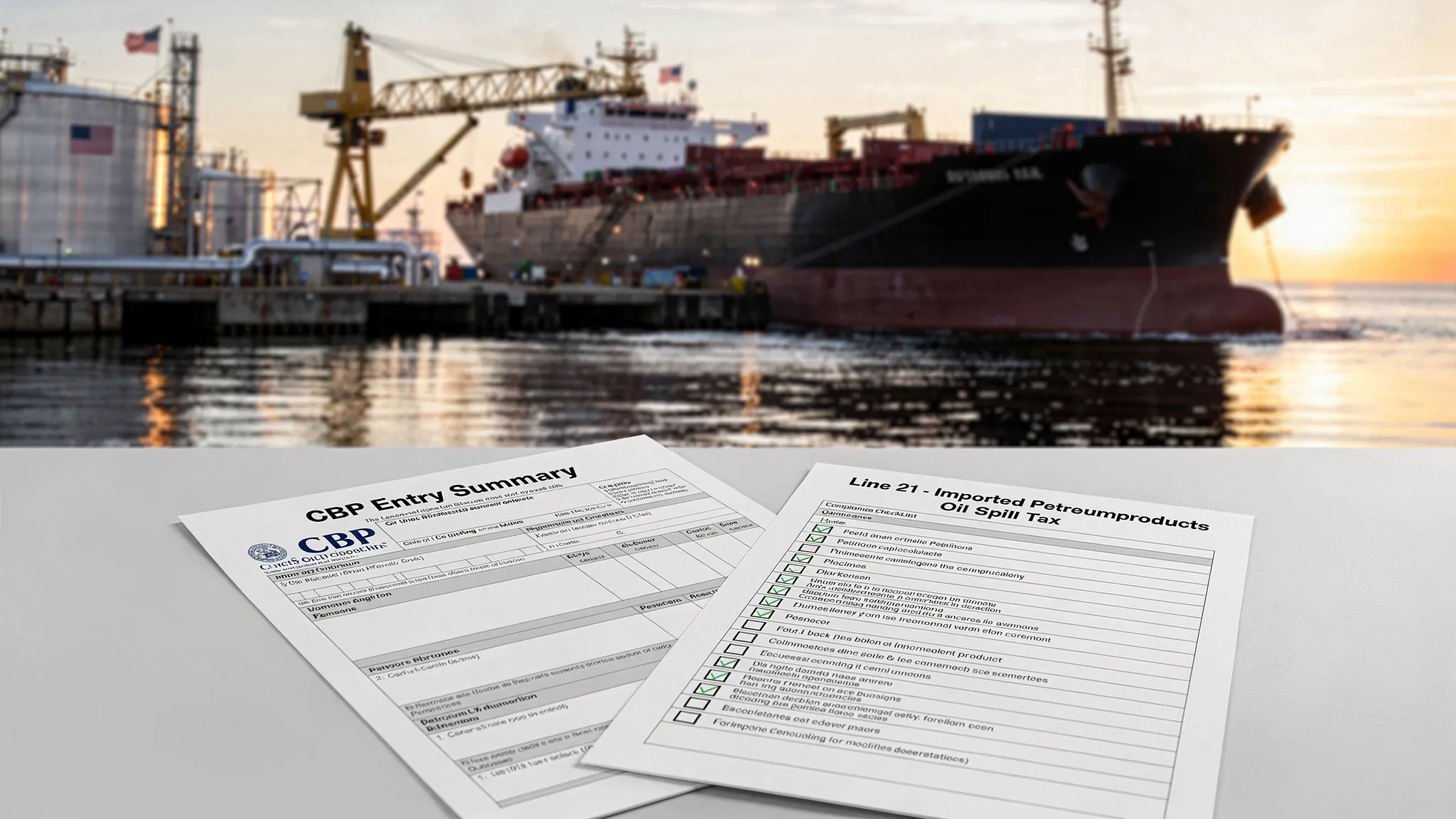
The importer of record generally owes the tax. Liability is tied to entry for consumption or withdrawal from warehouse for consumption in the United States. In practice, this means reconciling data from brokers, customs entry summaries, and terminal receipts.
The Oil Spill Liability Tax on Imports focuses on refined petroleum products crossing the border for U.S. consumption. Do not report the same barrels on the domestic crude line and the imported products line. The Imported Petroleum Products Oil Spill Tax (21) is the correct line for imported product volumes.
How to compute and report each quarter
The Imported Oil Spill Tax IRS rules require accurate reconciliation to customs documentation. You will include the totals in the same Environmental Tax section that houses other excise categories. References to IRS Oil Spill Tax on Imported Petroleum in the instructions will outline rates and any temporary changes. Some filers refer to this category as the Petroleum Import Oil Spill Tax, but the governing rules are the same.
- Aggregate the total barrels of imported petroleum products entered for consumption during the quarter.
- Apply the current statutory per-barrel rate.
- Subtract any allowable credits or exemptions, supported by entry and shipment documents.
- Report the liability on the Environmental Taxes section of quarterly form 720 and pay by the due date.
Exemptions, credits, and corrections
Certain exported volumes and other statutorily exempt uses may qualify for credits. Keep organized files with entry numbers, bills of lading, warehouse withdrawal documents, and any export proofs. If you discover an overpayment after filing, you can generally seek a credit or refund on a subsequent return or through a claim process, consistent with the instructions for your quarter.
Because this tax is part of the broader Environmental Tax framework on Form 720, ensure you classify each transaction correctly.
Do not confuse this with Foreign Insurance Tax or other, unrelated excise items that also appear in Part II.
Recordkeeping and common pitfalls
Importers should be able to trace every reported barrel to customs and terminal documentation.
Common pitfalls include:
- Double counting, for example, listing the same volume both as a domestic receipt and as an import.
- Using gallons or liters without converting and reconciling to barrels.
- Applying prior quarter rates rather than the current quarter’s rate.
- Reporting imported products on the wrong line. Use line 21 for the Imported Petroleum Products Oil Spill Tax (21).
Quick reference
| Item | Details |
|---|---|
| Who is liable | Importer of record |
| Taxable event | Entry for consumption or withdrawal from a bonded warehouse for consumption |
| Measure | Barrels of imported petroleum products |
| Where to report | Environmental Taxes on Form 720 Part II |
| Due dates | Quarterly return, due the last day of the month following the quarter end |
Conclusion
Accurate customs reconciliation, checking the current rates, and keeping your records in order are all key to staying compliant with the Imported Petroleum Products Oil Spill Tax (21). With eFile Excise720, you can build a process that ties together broker entries, terminal receipts, and your quarterly filing, so the totals on your return actually line up and are easy to support if questions come up.
Testimonials
The final person I talked to was able to really help me and stayed on the line until the issue was resolved. I was about to end the call but she convinced me that she knew what i needed to do. A very good customer service person. Superior!.
The final person I talked to was able to really help me and stayed on the line until the issue was resolved. I was about to end the call but she convinced me that she knew what i needed to do. A very good customer service person. Superior!.
The final person I talked to was able to really help me and stayed on the line until the issue was resolved. I was about to end the call but she convinced me that she knew what i needed to do. A very good customer service person. Superior!.